
Muzita: A Community Restaurant Honoring Family Legacy

Muzita Abyssinian Bistro has been serving authentic Eritrean and Ethiopian flavors from the heart of University Heights since October 2008, when founder Abel Woldemichael opened its doors alongside his wife, Yordanos Tesfamichael. We sat down with Abel to learn the story behind his self-described “community restaurant” and found it’s as much about family as it is about food.
The menu centers on richly spiced stews, sautéed meats, lentils, and vegetable dishes, built on spice blends like berbere, mitmita, and awaze. Most dishes are served family-style over injera — a tangy, spongy flatbread made from teff, used to scoop up every bite by hand. Vegetarian and vegan diners will find plenty of options here, alongside chicken, beef, lamb, and seafood dishes.
That communal, hands-on dining style mirrors the restaurant’s warmth — and its roots run deep in Abel’s family. Before opening Muzita, Abel spent years putting down roots as a CPA, but he was ready to grow a different kind of business now. The restaurant’s name and heart both trace back to his late sister, Muzit, whom he was extremely close to; naming the bistro after her let him honor her memory while building something new. His mother pitched in too, running the kitchen as head chef.
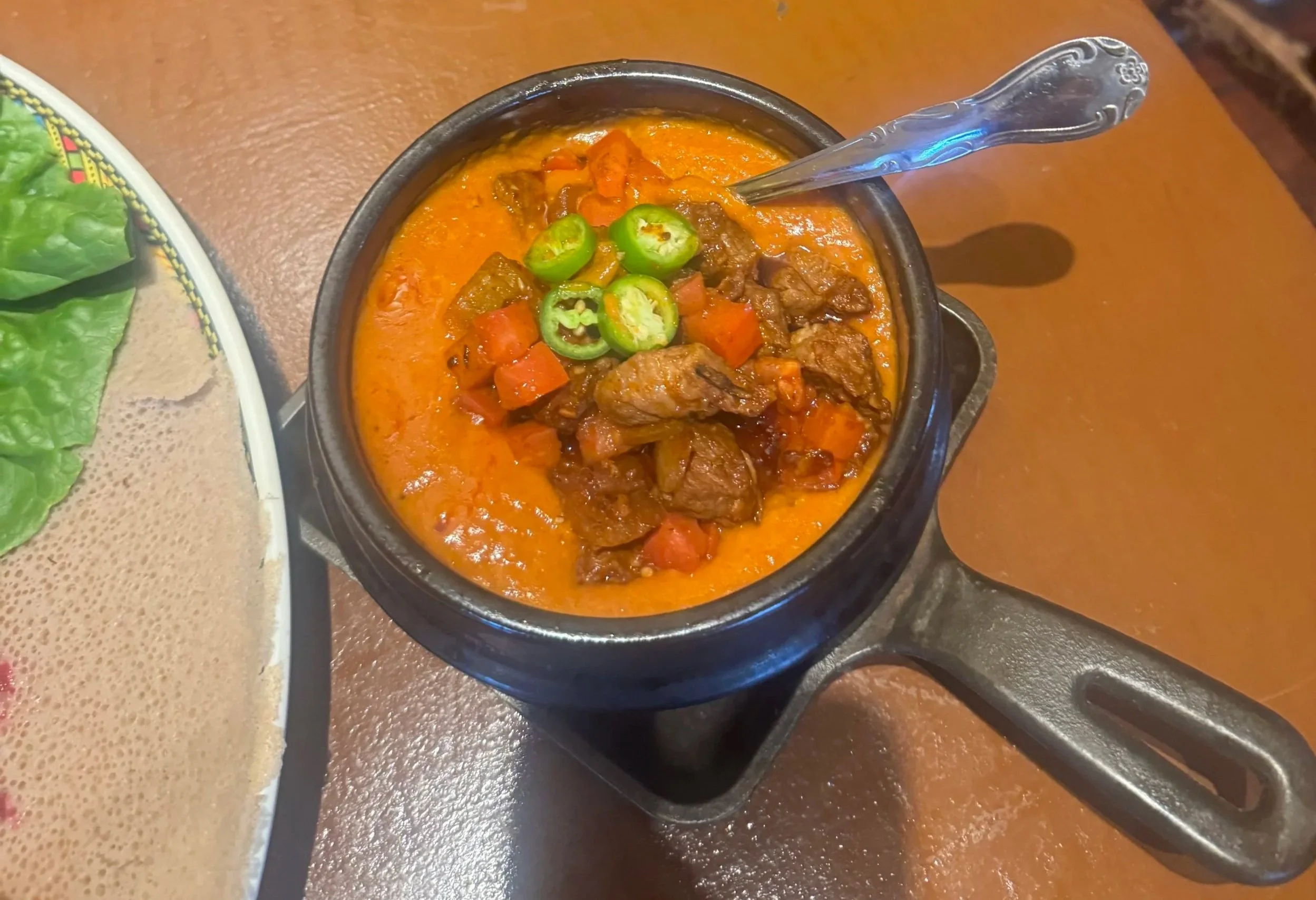
photo by Jennifer Ferrada
Reflecting on nearly two decades in University Heights, Abel has seen the neighborhood change plenty, but his love for the community hasn’t wavered. When Muzita first opened, it was one of the earliest participants in what’s now an annual tradition: the Taste of University Heights.
“Because we are a community restaurant, all in this area are literally my friends. We are not business friends. We know each other. If I need chairs, we sometimes trade. We even call Madison our waiting room sometimes when we get extremely busy with customers. As long as you spend your money in University Heights, we don’t care where you go.”
At its core, Muzita is Abel’s mission made edible: a restaurant that opens its doors not simply to serve food, but to honor his family’s legacy, preserve his sister’s memory, and celebrate the culture that shaped him.