
Canyon Safety Update: Pushing City and Caltrans on Encampments
For many of us in University Heights, our canyons are the lungs of our community—vital stretches of green that offer a reprieve from the urban hustle. However, as many residents have observed, maintaining these spaces requires more than just appreciation; it requires persistent advocacy.
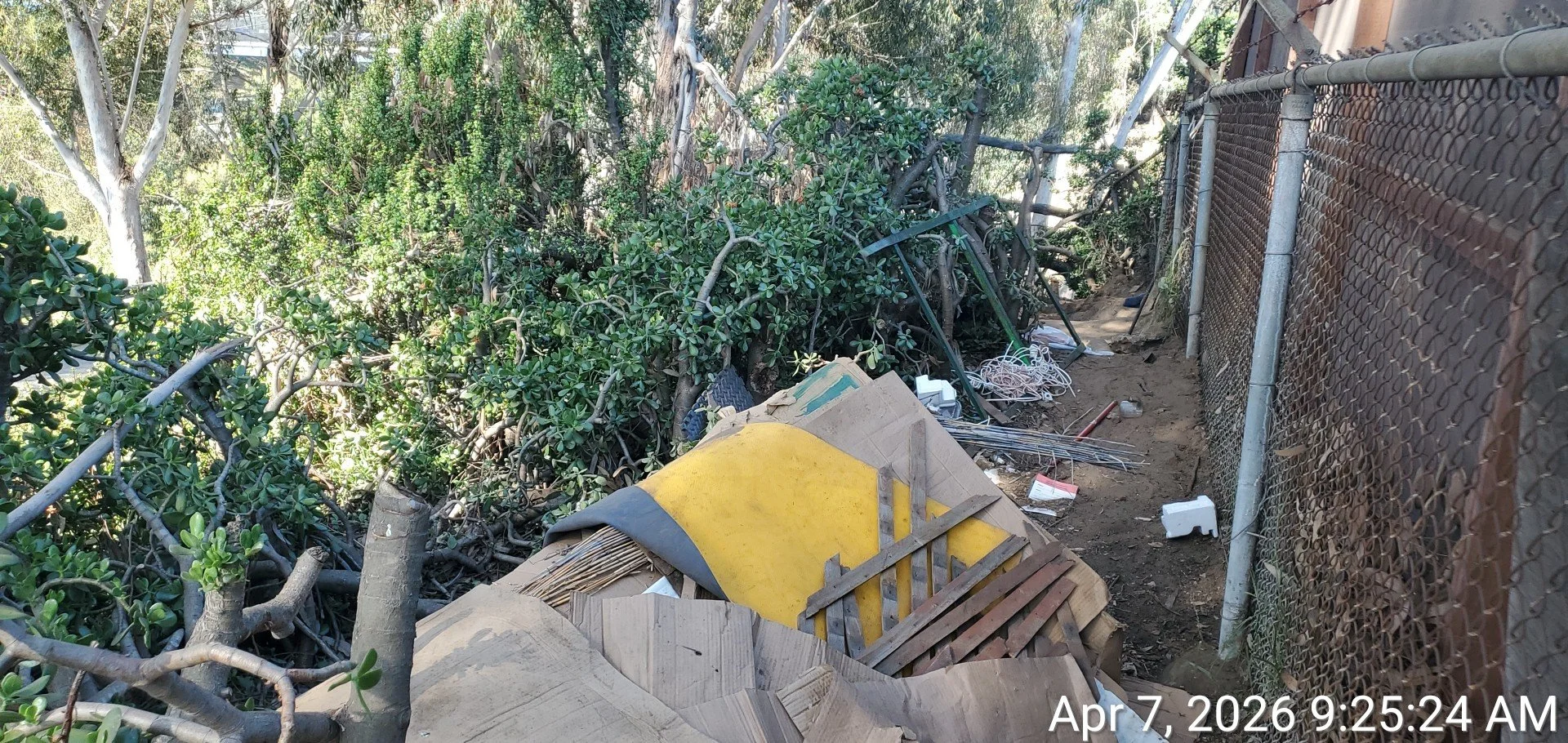
Photograph of a recent encampment by Dawn Sassi
For many years, there have been encampments in the canyons, specifically between 163 and Washington Street. Our Trash Talkers have removed thousands of pounds of trash from this area, the City has come in to clear them out numerous times, yet it continues to be a problem. It’s also been a source of danger for the wider community with multiple fires in the encampments, numerous objects left on the roadways, people crossing against high-speed traffic, and physical and verbal threats and vandalism against volunteers.
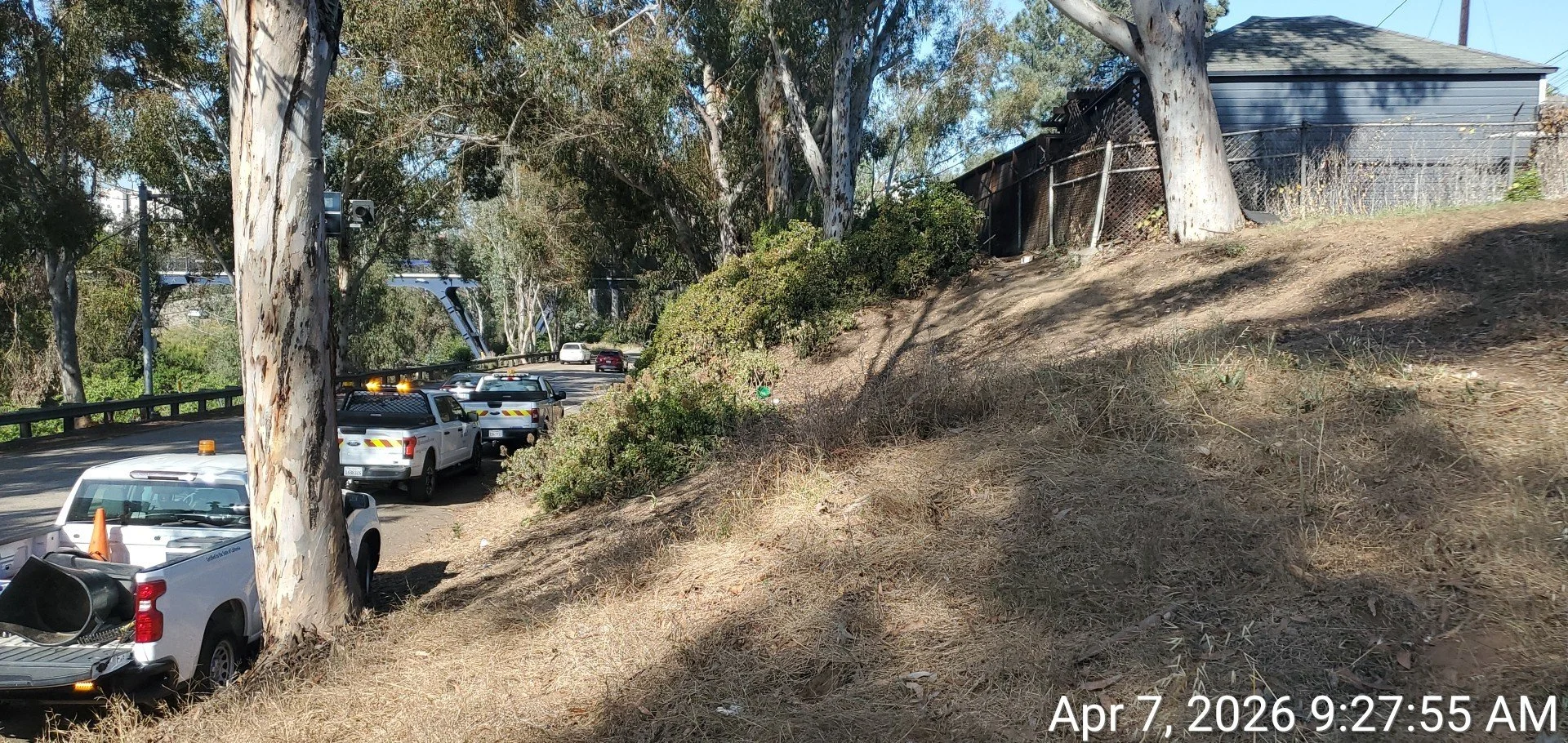
April clear-out effort along the 163 entrance requiring multiple departments, photo by Dawn Sassi
This month, we have some critical updates regarding the ongoing issues in our local canyon, following recent correspondence with the City of San Diego.
The Current State of Affairs
In a recent update from Christina Gaffney, the Community Representative
for Councilmember Stephen Whitburn’s office, it was confirmed that the City
is actively monitoring the challenges we’ve reported on City-owned land. The concerns—ranging from environmental preservation to public safety—have been escalated to several key departments, including Neighborhood Policing (SDPD) and Environmental Services.
One specific point of interest for neighbors is the potential removal of a large pepper tree in the 163 canyon, a long-standing fixture that has become a focal point of recent cleanup and safety discussions. The City is evaluating its removal as part of a broader effort to restore the area’s integrity.
The Caltrans Challenge
The most significant hurdle we face is a classic case of jurisdictional “red tape.” While the City is responsible for certain patches of land, other sections fall under the authority of Caltrans.
According to Randy Reyes in the Mayor’s office, the current working agreement between the City and Caltrans is unfortunately limited. As it stands, the agreement to share maintenance and oversight only covers the “s-curve” near and around Downtown. This leaves many of our specific canyon areas in a state of bureaucratic limbo.
The good news? The Government Affairs team and Environmental Services Department are actively working to expand this agreement to cover more ground. The goal is to ensure that when an issue arises, we aren’t met with a “that’s not our department” response, but rather a coordinated effort between state and local agencies.
Call to Action: Make Our Voices are Heard - Loudly & Frequently
The City has been clear: they need our help to move the needle. To convince State officials and Caltrans of the gravity and persistence of these issues, the community must make its voice heard at the state level.
We are encouraging all residents to reach out to Assemblymember Chris Ward’s office. By sharing your firsthand accounts of the seriousness of the canyon’s condition, you provide the leverage our local Councilmember needs to demand faster action from Caltrans.
What we can do as a community:
Contact Assemblymember Chris Ward’s office to underscore the persistence of the issue: christopher.gris@asm.ca.gov
Document specific areas of concern (with photos) to share with representative offices: cgaffney@sandiego.gov
Stay informed here, on our website www.uhsd.org, through our
ZoneWatch program, and engaged at our quarterly meetings as we continue apply public pressure.
As Christina Gaffney noted in her latest message to the UHCA Board following up on this issue, our collective advocacy and more messages to elected officials are what keeps these projects on the radar. Let’s ensure our canyons and our surrounding areas are the safe, beautiful community assets they were meant to be.