A Landmark is Born: The Colorful History of the University Heights Sign
The University Heights trolley sign is more than just neon and steel; it is a carefully crafted narrative of our community's past. While it faces a dark period today, its origins were a bright spot of community activism and historical pride.
1994: A Vision in Gold and Blue
The story began in July 1994, when Councilmembers Ron Roberts and Christine Kehoe secured federal Community Development Block Grants for a landmark to mark the neighborhood’s historic commercial core. To ensure the sign truly belonged to the people, a design contest was launched that September.
Out of more than twenty entries, Kevin Whaley’s design was chosen for its deep symbolism:
The Cobblestone Pillars: A nod to the historic hand-laid stone walls of Mission Cliff Gardens.
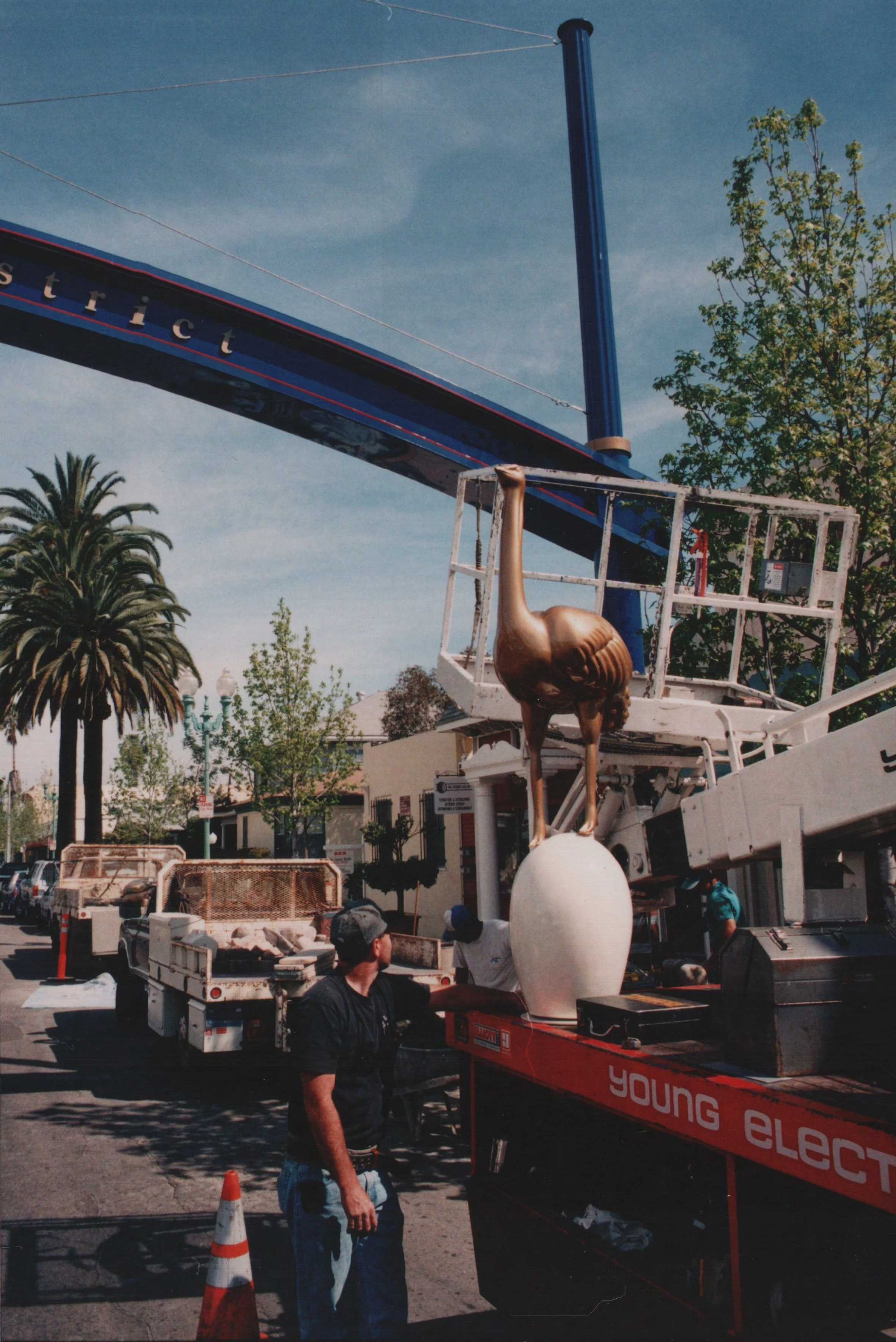
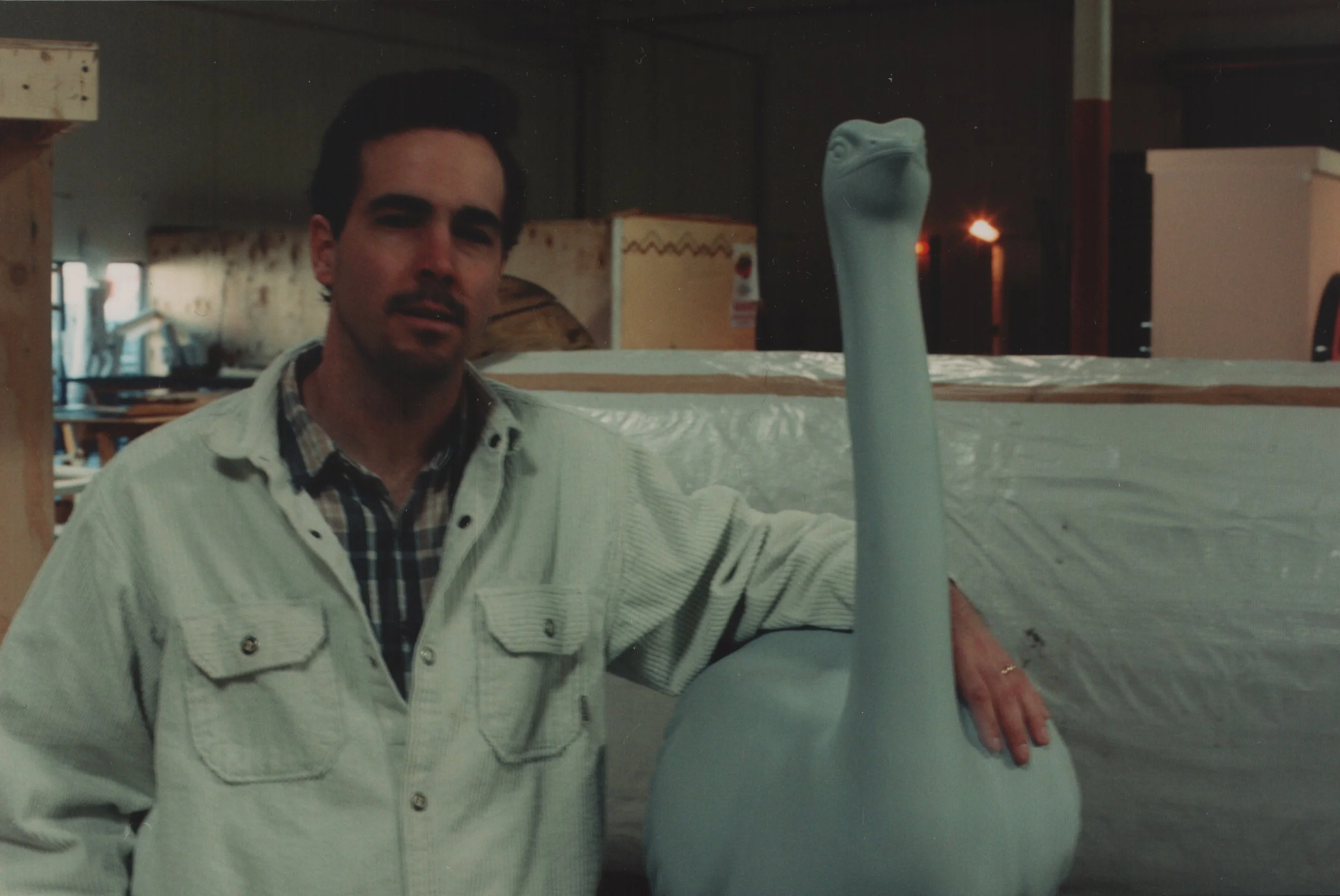
The Golden Ostriches: Honoring the Harvey Bentley Ostrich Farm, where early residents once rode the giant birds.
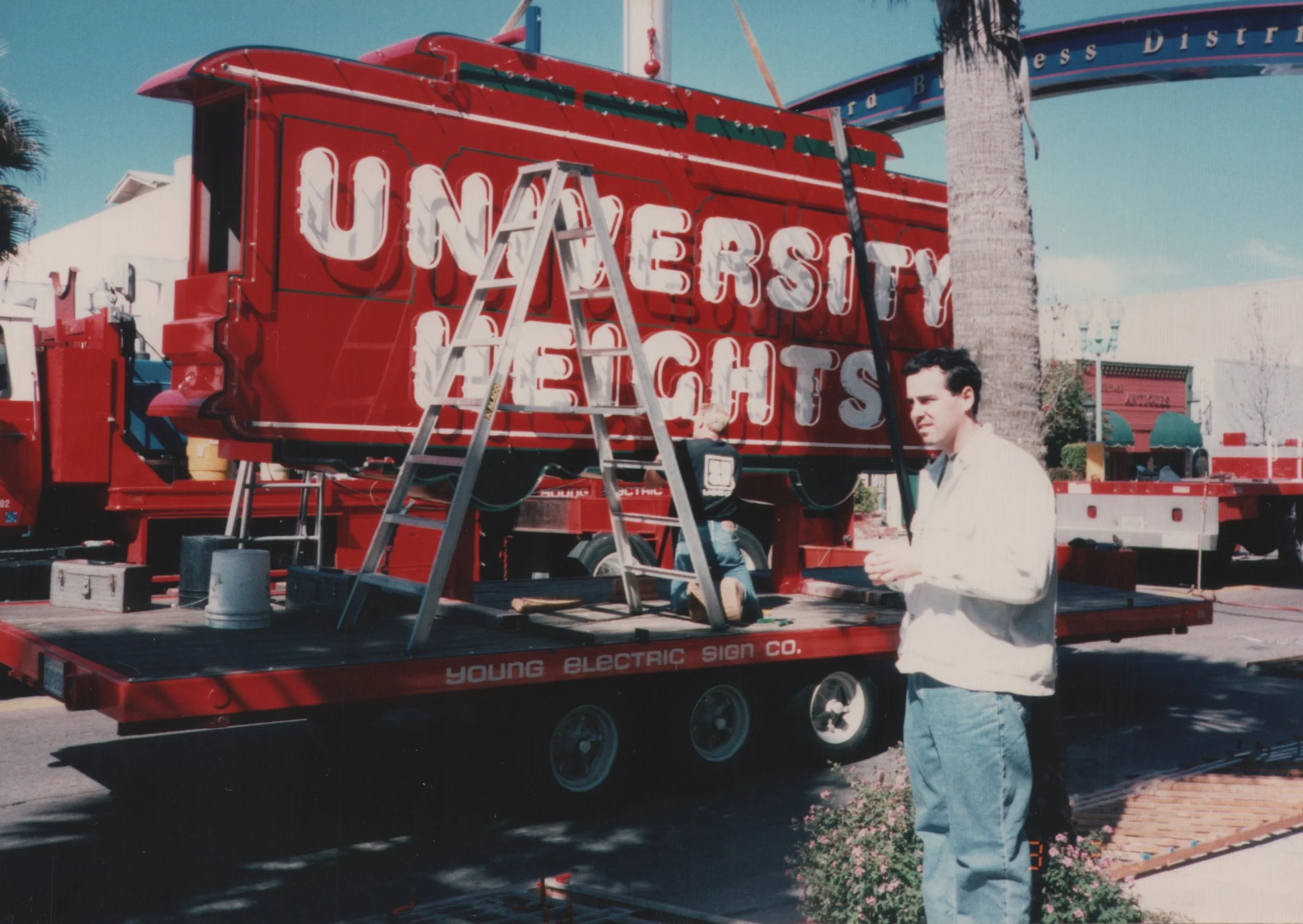
The Trolley Silhouette: Celebrating the electric streetcar lines that originally defined University Heights as a transit hub.
1997: Assembly and the "Miracle" Switch
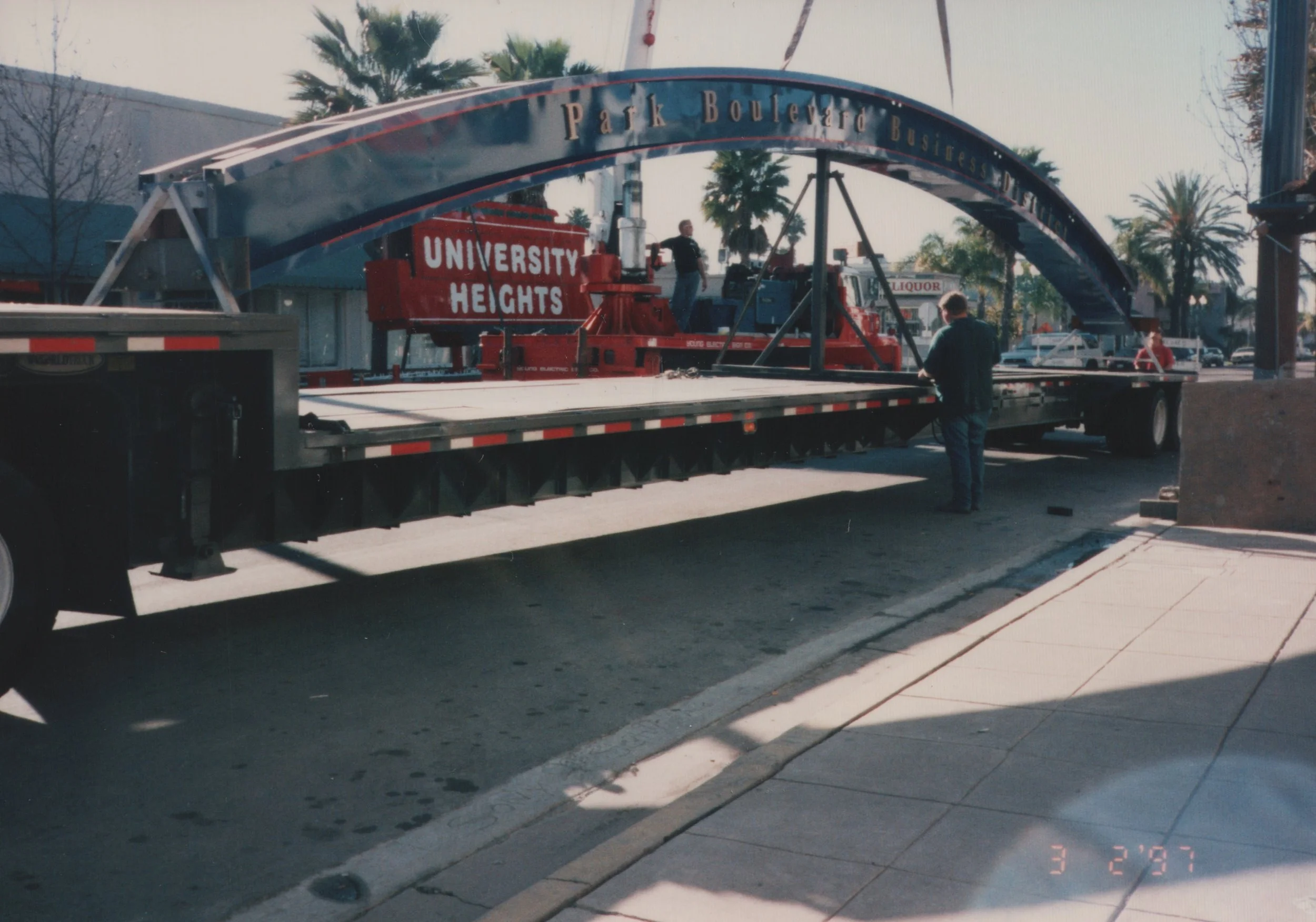
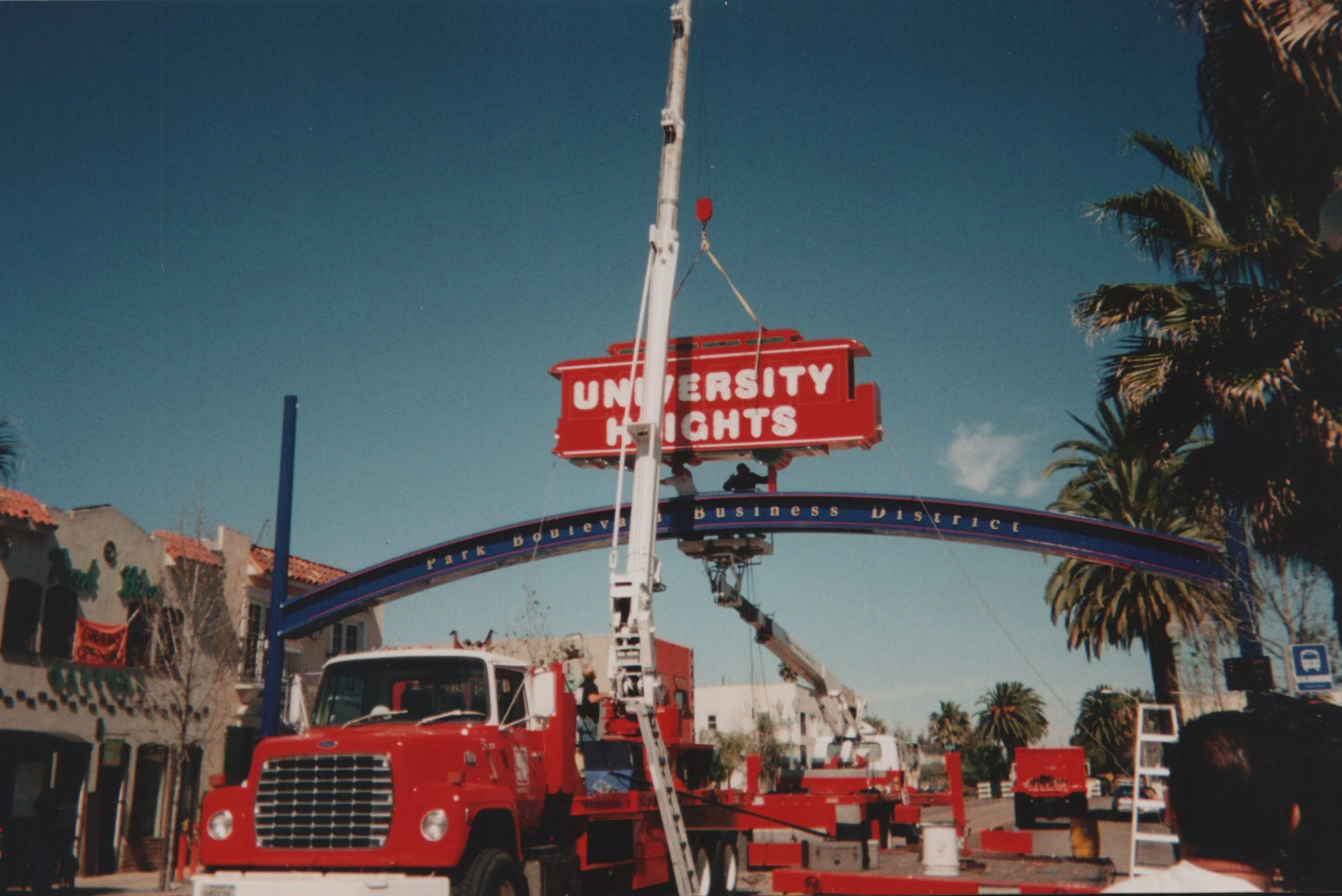
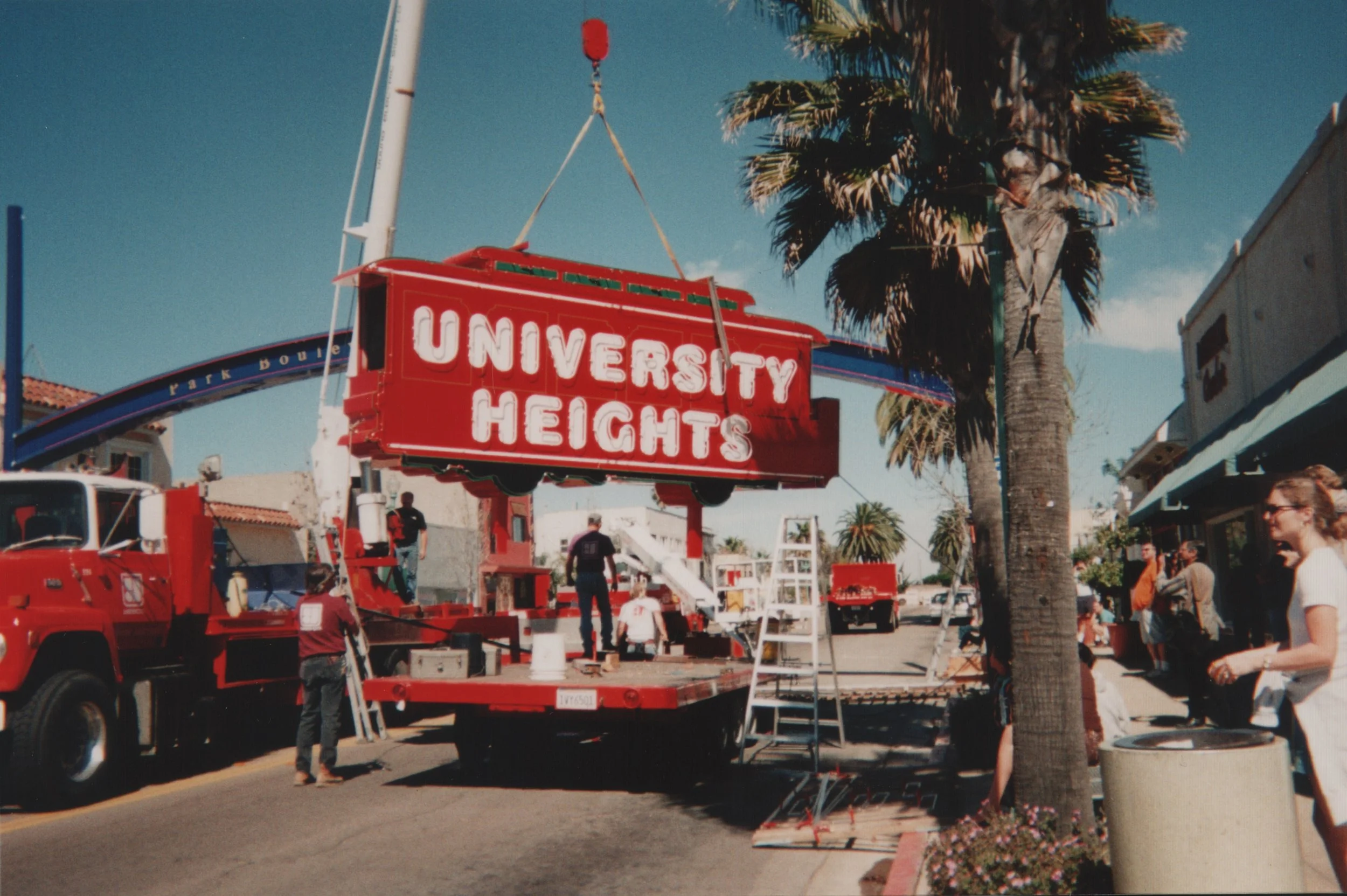
The physical landmark arrived on Sunday, March 2, 1997. Neighbors lined the streets as massive cranes hoisted the sign components into the air, and the total construction cost reached approximately $60,000.
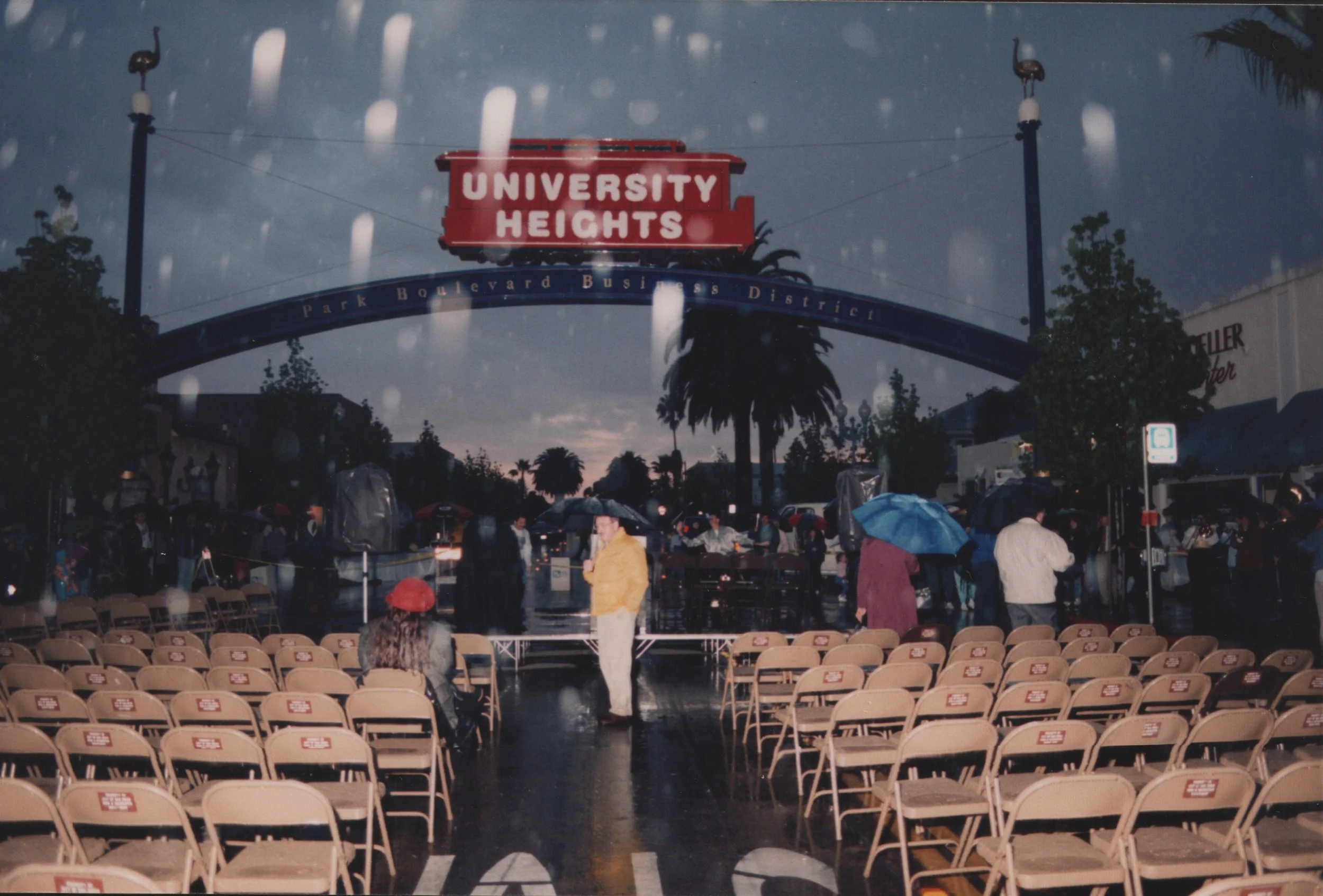
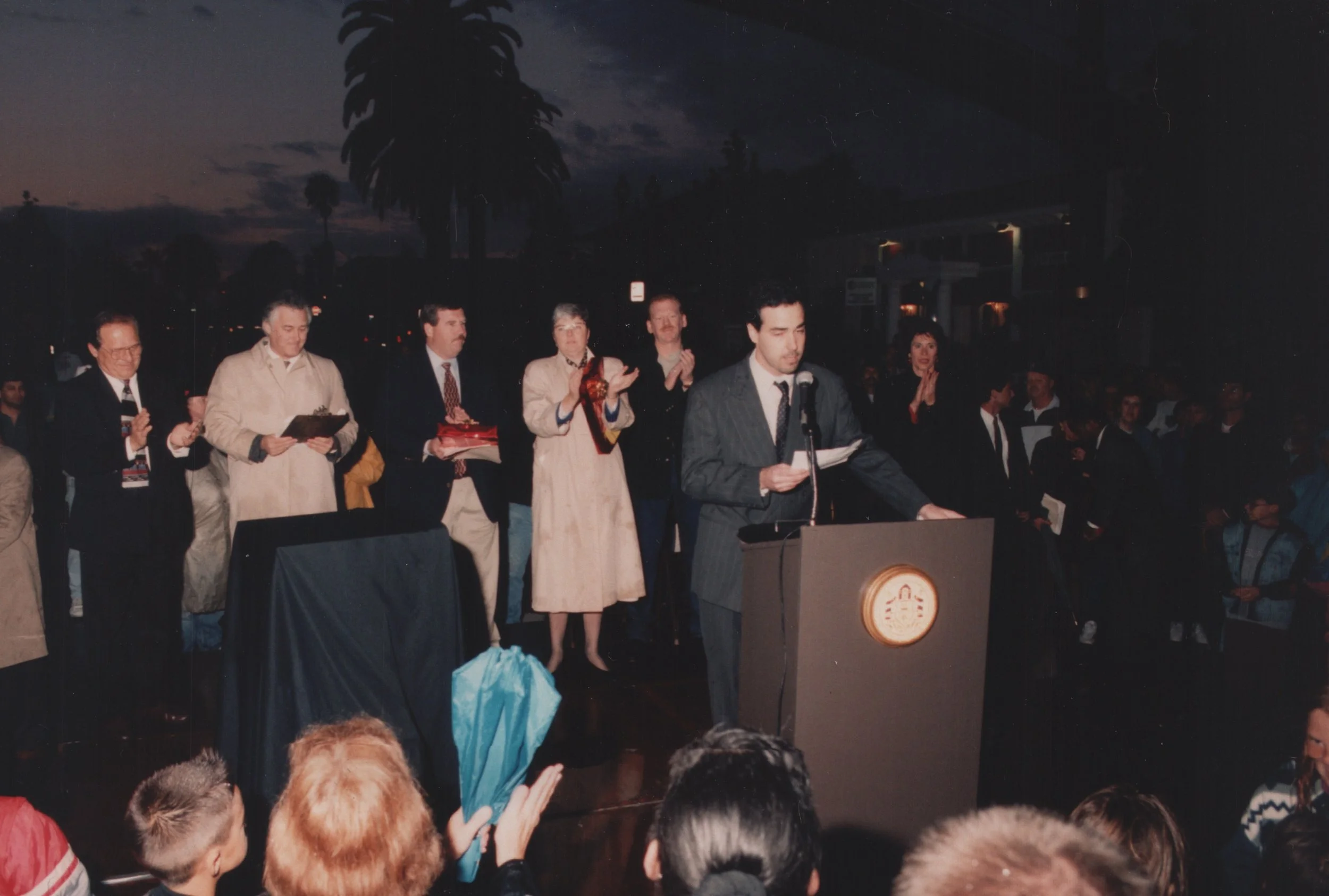
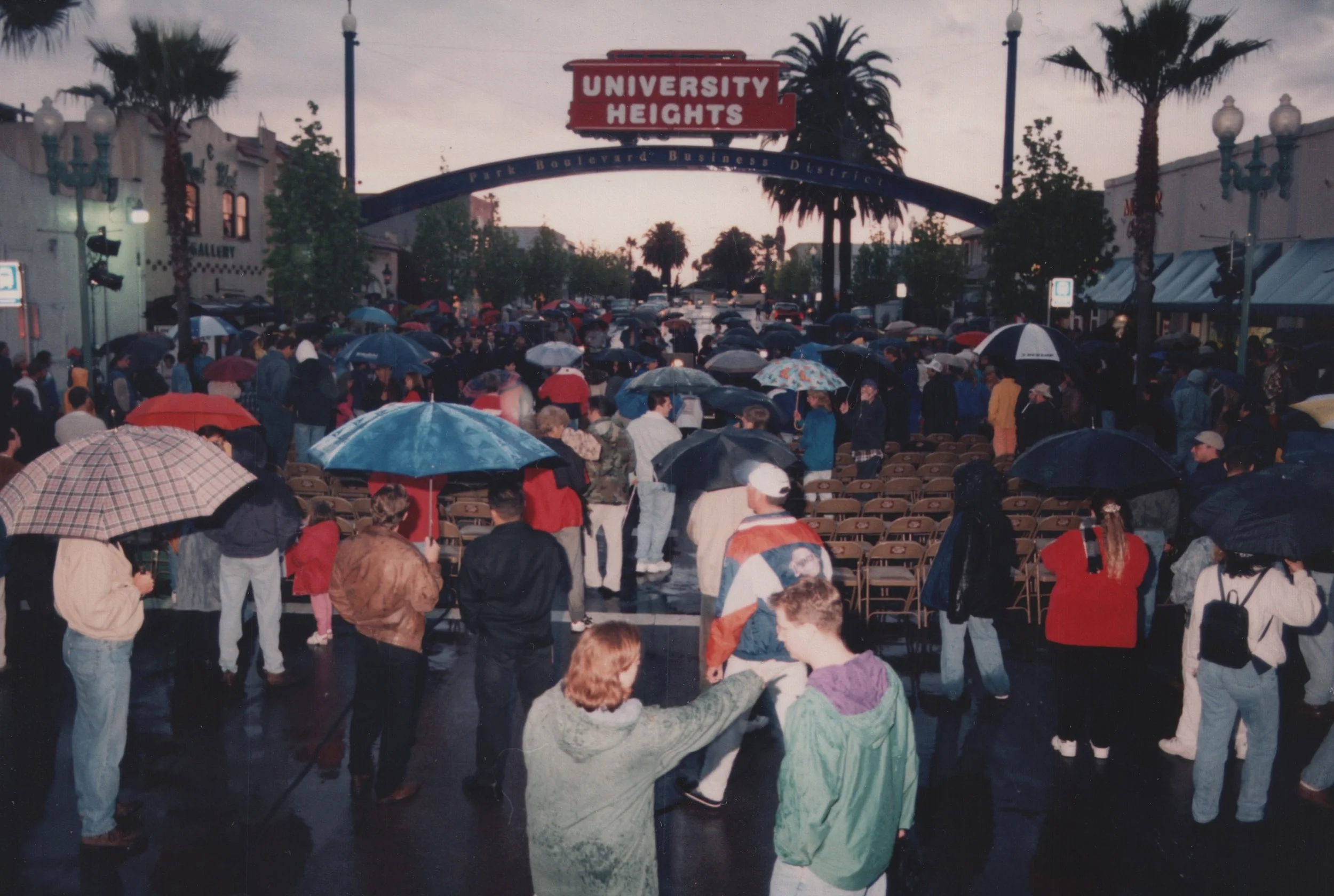
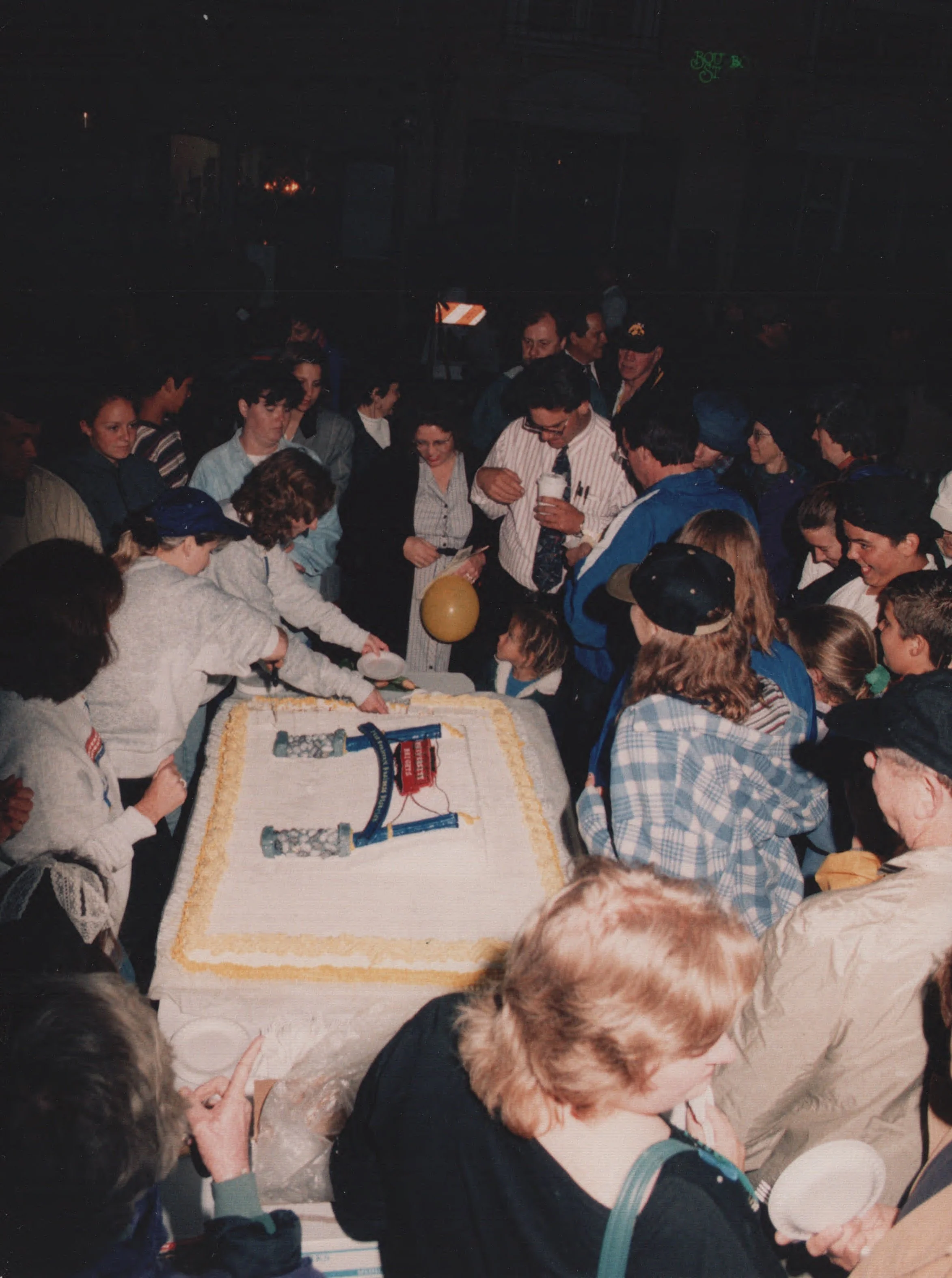
The official lighting ceremony on April 3, 1997, has since become a piece of local legend. A crowd of over 500 residents gathered as a sudden rain shower threatened the festivities. However, just as Mayor Susan Golding pulled the ceremonial switch, the rain miraculously stopped at the exact moment the neon flickered to life.
A Legacy Worth Saving
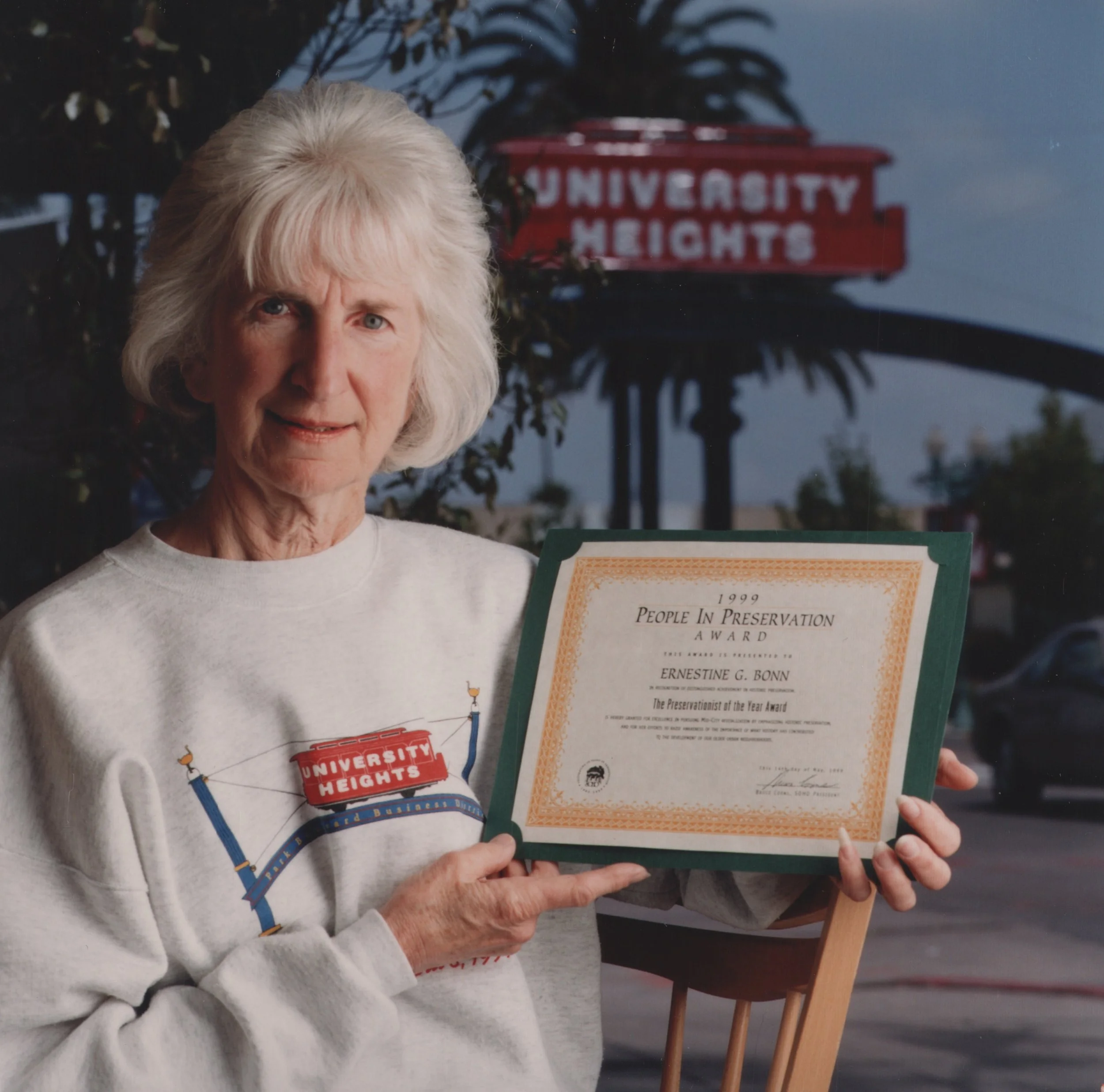
For decades, the sign has been anchored by the work of tireless advocates like the late Ernie Bonn, who was instrumental in its installation and the broader preservation of our historic landmarks. It is the "face" of University Heights, having received its last major structural repainting in 2011 and routine maintenance as recently as 2022. Saving this sign is not just about fixing a light—it is about preserving the "miracle" and the history that defines who we are.