
Your Dog Won’t Stop Barking, But Have You Tried Saying Thank You?
By Lola Handzel
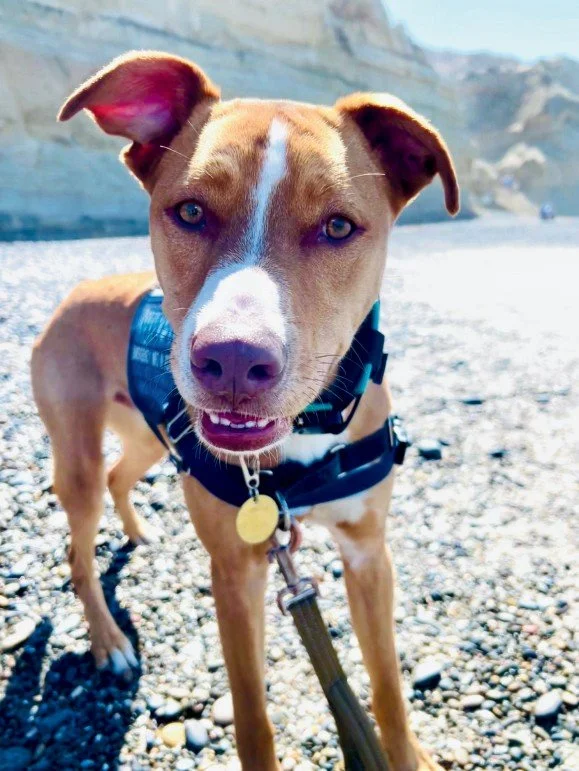
As a professional dog trainer, I get a lot of requests to help curb barking dogs. Not only can unwanted barking grate on guardian nerves and disrupt your daily life, it can also impact an entire community with noise pollution and negative effects on other dogs. Barking is an inherent communication need for most canines. Reasons for barking include alerting and warning, seeking attention, making demands, expressing physical and emotional discomfort, saying they’re excited, and all too often because they’re bored.
The first step to address barking is to eliminate potential medical reasons like pain, which may require a trip to your veterinarian. Next, consider whether your dog is truly getting enough physical, mental, and social enrichment. Many dogs, but especially smart dogs, need more healthy stimulation than we regularly provide. Everyone needs a purpose. When dogs aren’t given enough “work,” they self-assign tasks, which usually occur in unwanted ways, like barking.
But have you tried saying thank you? I’m serious. Imagine being the goodest dog who loves your humans so much. You identify a danger — looks like a potential murderer to you — so you bark to warn your people. Now imagine how frustrated you’d feel if their response was to say shut up, be quiet, or repeatedly yell your name. Without acknowledgement of the “threat,” there’s no reason for your dog to stop barking. They’re trying to help you, and you’re not listening! So instead, give them validation to de-escalate and allow for regulation.
I learned the following technique from Bonnie Wood, a trainer in the Portland, Ore. area, with whom I worked over 15 years ago. She positively influenced many of my training philosophies, but especially how to reduce unwanted barking. It’s imperative to acknowledge your dog when they bark. Do this immediately, saying, “OK. Thank you.” Then, for the millisecond they’re quiet, mark “Yes, good quiet,” and call them to you away from the trigger to distract and reward with a toy, food, pets, or some other treat. Timing is everything in this exercise, and tone matters too.
You’ll have to repeat the steps and keep your energy focused entirely on your dog until they are calm and quiet. It helps immensely to separately train your dog on “all done” and “leave it” and reinforce their choice to stop barking with “Good, all done” or “Good, leave it.” These commands mean very different things, which we can discuss in the future. Over time, you’ll increasingly delay the reward in between the stopped barking and the reward. This is important so your dog doesn’t think you’re rewarding the barking over the quiet. Most importantly, keep at it! Consistency is everything here, as is patience.
Lola Handzel is a professional dog trainer and UHCA business member. Learn more at DogTrainingByLola.com or call 619.800.1086.