
Buy Less, Pay More, Save the World
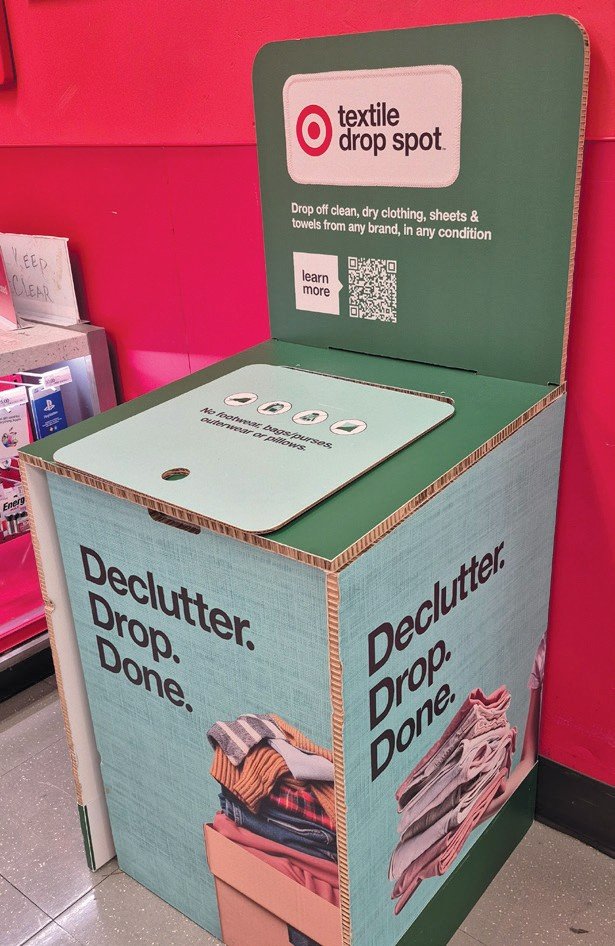
A Target “Textile Drop Spot” clothing donation bin.
San Diego County’s website says it takes 713 gallons of water and 1/3 pound of pesticides to produce one t-shirt, which might make one ponder whether we’d toss those new shirts and other fast fashion items into our carts as easily as we do if we had to check a box acknowledging the resources spent on their manufacture. If we had to review and check off photos of mountains of discarded textiles in the Atacama Desert or dumpster loads full of polyester (plastic) clothing being incinerated or bulldozed into our local landfill, would we perhaps think twice about whether we should buy?
Lots of folks in UH are already careful to avoid fast fashion. And we’re lucky enough to have great vintage and resale stores in and around our neighborhood where we can shop when we do need to add to our wardrobes. Individuals can’t undo the fast fashion environmental horror show alone, though.
California’s Responsible Textile Recovery Act of 2024, the first U.S. law requiring textile producers and/or distributors to participate in a program that supports collecting, sorting, repairing, reusing, and recycling clothing and other textiles (like pillows and towels), is already starting to help, although it won’t go into full effect until 2028. Target’s new “Textile Drop Spot” bins, for example, are taking donations but don’t yet accept anything but clothing.
Vanessa at the Mission Valley Target store says that even if the new cardboard bin near the Returns desk is full when customers stop by to deposit discarded clothes, staff behind the desk will accept our sacks full of wardrobe refuse and add them to the big bins out back, which are collected once a week and, according to Target, sorted for reuse, recycling, downcycling, or are responsibly disposed of based on the item’s condition. Interestingly, the Mission Valley Target drop-off bin is getting a lot of use, but some other local Target bins, like the one in South Park, aren’t seeing much customer interest. Maybe South Parkians reuse and recycle all their old clothes at home? Are they making quilts out of their old concert tees and rag rugs out of old jeans and blankets?
Or do they simply know that new stuff isn’t the actual source of happiness, and before buying anything, ask themselves what Barbara Kingsolver says is a central question in the poet Wendell Berry’s work: “Is my need for this thing important enough to inflict this injury on the world?” It’s a great question. Until we come up with the right answer, we can dump our leftovers at Target.